Small changes at home can add up to real savings. These ten tips come from the US Department of Energy, ENERGY STAR and the US Energy Information Administration.
Turning your thermostat back 7 to 10°F for 8 hours a day can save up to 10% a year on heating and cooling, according to the Department of Energy.
Heating and cooling are almost half of a typical home's energy bill (ENERGY STAR). A smart thermostat does the work for you.
LED bulbs use at least 75% less energy than old bulbs and last up to 25 times longer (DOE).
About 90% of the energy a washer uses goes to heating water. ENERGY STAR washers use about 20% less energy (ENERGY STAR).
Check your heating and cooling filters every month and change them when dirty (ENERGY STAR).
TVs, game consoles and chargers use power even when off. Plug them into a power strip and switch it off at night.
A plug-in usage monitor shows how much a device uses. The DOE formula: watts × hours per day ÷ 1,000 = kWh per day (DOE).
Caulk and weatherstripping around doors and windows keep heat in and cold out (DOE).
Water heating is a big part of home energy use. A slightly lower setting and shorter showers help.
The average US home uses about 899 kWh a month (EIA). Check yours on your bill and watch it go down as you make changes.
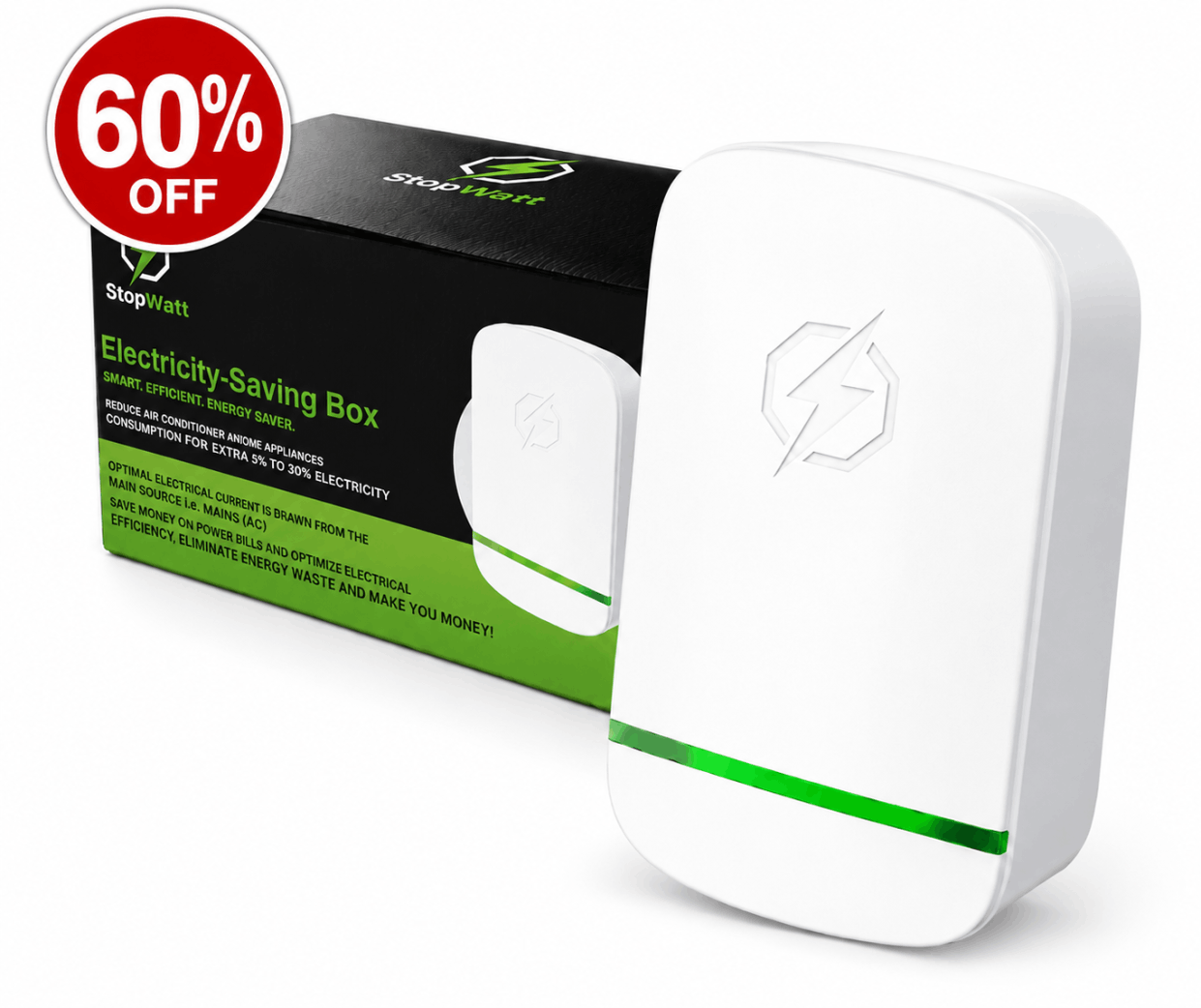
If you are trying StopWatt, track your meter readings as you go, using our bill tracking guide, and remember the 60-day Power Saving Guarantee.
Learn more: what StopWatt is and StopWatt FAQ.
Adjust your thermostat, switch to LED bulbs and wash clothes in cold water. These are simple and proven.
The DOE says turning it back 7 to 10°F for 8 hours a day can save up to 10% a year on heating and cooling.
About 899 kWh a month, according to the US Energy Information Administration.